

Writing lets you look at your thoughts in a way you couldn’t if you were just talking, and having seen them, you could improve them, make them stronger and more elaborate. – Ted Chiang
I didn’t always love writing. In fact, writing was never a subject I excelled at in school. As I got older, I realized how our lives are composed by the written word. Whether you’re a student, a waitress, or an accountant, writing is a be a pivotal skill in how we communicate with each other.
I have always chased creative undertakings. When I was younger, I loved drawing. As I got older, I got into music and began mastering the guitar. In college, I started to enjoy the act of writing. It felt to me like an art of it’s own. Something you could never quite perfect. If I wrote a great essay, there were always areas where I could improve a sentence with another word, or make the paragraphs flow together fluidly by rearranging things. I enjoyed reading a well-worded humorous email, and loathed the stuck-up ‘Corporate-ese’ you skim through when a company sends out a memo about IT updates or how they’re “with you” during these “trying times.”
My love of writing began through Twitter, believe it or not (for those who remember my @KRanga3 days). I would write down jokes or funny observations throughout the day. My tweets got me noticed, and after a year or so of developing a strong Twitter following (strong in 2012 was like 500 followers), I got an offer from the school’s newspaper to write a weekly humor column called Thumbs Up, Thumbs Down.
For some reason, I didn’t quite appreciate what I was doing at that age. I didn’t see a future in writing so I didn’t take it seriously. In hindsight, I wish I had relished that moment. I should have tried to do as much as I can, seek advice from peers of how I could improve my writing, or even write feature pieces. But I wasn’t thinking that far ahead. I didn’t yet think of writing as a craft. I thought it was kind of lame but occassionally fun and something that my friends would find entertaining.
After I graduated college and continued blogging, I realized I still enjoyed writing. I still wasn’t taking it seriously, but I found joy in it the same way I had when I was learning an instrument. I liked researching things, backing up my claims with proof, or looking for ways I could make my articles funnier or more interesting. I always felt like I was getting better. Even today, I look back at something I wrote just six months ago and think, “Who the hell wrote that garbage?”
In 2019, I enrolled in a Creative Non-fiction Writing class at NYU. It was mostly older folks who wanted to write a novel or a memoir but lacked the confidence to move forward with it. As the youngest person in class, I wanted to make sure I didn’t end up waiting decades to pursure my passion. These people were talented, and easily could have had a number of books or articles published in their lifetime. I wanted to make sure I got ahead of that version of myself, so my goal this year was to be published.
So far I have accomplished that feat, but there’s a lot more work to be done. As I’ve written about previously, my goal is to one day either write a book, or be a featured columnist on a top-tier publisher like Esquire or The Wall Street Journal. Right now I’m not worried about that – I’m simply focused on getting better at the craft, doing good work to get published, and making a better by-line.
In order to improve, I had to do my fair share of studying. I created my own course on writing. First, I bought a few books about creativity and process: The War of Art by Stephen Pressfield and What I Talk About When I Talk About Running by Haruki Marukami. Neither of these books are about writing necessarily, but each instruct the reader how to develop a consistent practice of disciplined creativity through stories. Marukami talks about how he equates training for a marathon to writing, and Pressfield talks about getting the most out of your “muse.” Each of these books have gone a long way in helping me to develop and gain confidence. I’d recommend these books to any creative, whether you are a musician, a poet, or a designer.


For the fundamentals of writing there are three must-read books:
- On Writing by Stephen King
- On Writing Well by William Zissner
- The Elements of Style by William Strunk


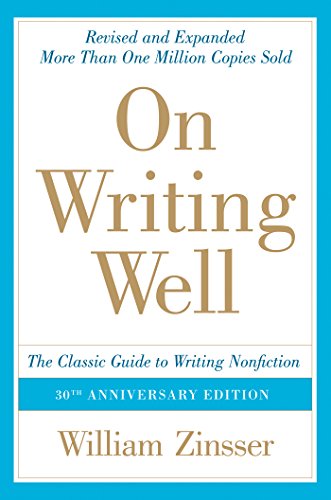


The pages of these books are filled with such a dense amount of writing knowledge. I highlighted every page and took copious notes. There were tips on what to do and what to absolutely avoid at all costs. I’m still learning these, but to even have just a few of these nuggets in the back of your head as you’re writing a company memo or an email to your family wishing them a Merry Christmas. These are the notes I have taken as the most critical in my writing:
These three books alone will teach you more than most mediocre writing classes. While experience is always the best teacher, a good foundation is critical in gaining ground in any pursuit. These books are my foundation.
Great writing advice
- Write what you like, then imbue it with life and make it unique by blending in your own personal knowledge of life, friendship, relationships, sex, and work. Especially work. People love to read about work. God knows why, but they do.
- The scariest moment is always just before you start. After that, things can only get better.
- What is the most important thing for a young writer just beginning to submit their work? Good presentation.
- You must begin as you own advocate, which means reading the magazines publishing the kind of stuff you write.
- Novels are really just letters aimed at one person.
- Take you story through at least two drafts; the one you do with the door closed and the one you do with it open.
- The best stories end up being about the people rather than the event.
- Stories are found things, like fossils in the ground.
- In your writing room there should be no telephone, no TV, draw your curtains closed. When you write, you want to get rid of the world, do you not? Of course you do. When you’re writing, you’re creating your own worlds. It’s CREATIVE SLEEP.
- Your job is to make sure the ‘muse’ knows where you’re going to be every day from 9-noon or 7-3pm. If he does know, I assure you that sooner or later he’ll start showing up, chomping on his cigar and making his magic.
- If you expect to succeed as a writer, rudeness should be the second to least of your concerns. The least of all should be polite society and what it expects. If you intend to write as truthfully as you can, your days as a member of polite society are numbered, anyway.
- You must not come lightly to the blank page.
- Stopping a piece of work just because it’s hard, either emotionally or imaginatively, is a bad idea. Sometimes you have to go on when you don’t feel like it, and sometimes you’re doing good work when it feels like all you’re managing is to shovel shit from a sitting position.
- When you write a story, you’re telling yourself the story. When you rewrite, your main job is taking out all the things that are NOT the story.
- Writing lets you look at your thoughts in a way you couldn’t if you wre just talking, and having seen them, you could improve them, make them stronger and more elaborate.
- Every successful piece of nonfiction should leave the reader with one provocative thought that he or she didn’t have before
- I don’t like to write. I like to have written.
Quotes from Artists
“If you want longevity in this business [stand-up comedy], at least for me, is to start by asking yourself personal questions. I write from this: I ask myself what I’m afraid of, what I’m ashamed of, who I’m pretending to be, who I really am, where I am versus where I thought I’d be… If you watched youself from afar, if you met yourself, what would you say to yourself? What would you tell you?” – Comedian and Actor, Bryan Callen.
“The limits of my language mean the limits of my world.” – Ludwig Witgenstein
Stephen J. Dubner on the worst advice he hears often: “‘Write what you know.’ Why would I want to write about what little I know? Don’t I want to use writing to learn more?”
“Don’t go for funny. Go for the truth, and you’ll hit funny along the way.” – Actor Jon Favreau
“People don’t like being sold products, but we all like being told stories. Work on the latter.” – Tim Ferriss
“Even if I didn’t know what to do, I just had to begin. For a lot of people, that’s the part that keeps them back the most. They think, ‘Well, I don’t have an idea, so I can’t start.’ I know you’ll only get the idea once you start. It’s this totally reverse thing. You have to act first before inspiration will hit. You don’t wait for inspiration and then act, or you’re never going to act, because you’re never going to have the inspiration, not consistently.” – Filmmaker Rober Rodriguez (Sin City, Desperado)
“The goal isn’t to get good ideas; the goal is to get bad ideas. Because once you get enough bad ideas, then some good ones have to show up.” – Seth Godin, author of Linchpin
“Writing is a skill that requires practice. So the first part of my system involves practicing on a regular basis. I didn’t know what I was practicing for, exactly, and that’s that what makes it a system and not a goal. I was moving from a place with low odds (being an out-of-practice writer) to a place of good odds (a well-practiced writer with higher visibility). – author Scott Adams
“I was told my goal should be ‘two crappy pages a day.’ That’s it. If you hit two crappy pages, even if you never use them, you can feel ‘successful’ for the day. Sometimes you barely eke out two pages, and they are truly terrible. But at least 50% of the time, you’ll produce perhaps 5, 10, or even – on a rare miracle day – 20 pages. Draft ugly and edit pretty. – Neil Strauss, author of The Game
“Write to please just one person” – Kurt Vonnegut
“The second you start doing it for an audience, you’ve lost the long game because creating something that is rewarding and sustainable over the long run requires, most of all, keeping yourself excited about it… Trying to predict what [an audience will] be interested in and kind of pretzeling youself to fit those expectations, you soon begin to begrudge it and become embittered – and it begins to show in the work. It always, always show in the work when you resent it. And there’s really nothing less pleasurable to read than embittered writing.” – Maria Popova, writer and creator of the blog Brain Pickings
The “Don’t Do’s” of Writing
- Examine every word you put on paper. Never say anything in writing that you wouldn’t comfortably say in a conversation. Half of writing is taking out the junk that you put in there in the first place. There’s so much unnecessary clutter. Take the adjective “personal” and in “a personal friend of mine.” Obviously it’s a “personal” friend of yours. What other kind is there? Here are some no-no’s in writing as compiled through several writing books.
- Don’t set up a business that you can start or launch. Don’t say the president of the company stepped down. Did he resign? Did he retire? Did he get fired? Be precise. Use precise verbs.
- Good writing is lean and confident. Don’t hedge your prose with little timidities like “quite,” “a bit,” “pretty much,” “rather,” “too,” etc. They dilute your style and persuasiveness,
- Be be kind of bold. Be bold.
- “The fact that…”
- “At the end of the day…”
- Avoid beginning paragraphs with “One of the most…” – otherwise it’s ok to use in the middle or end
- “Kind of” or “sort of” are not to be used as a substitute for “rather” or “something like”
- “Like” governs nouns and pronouns; before phrases and clauses the best word is “as”
- Don’t use the word “factor”
- Get, have got or have. Use “Got” instead
- When “However” comes first, it means “In whatever way” or “To whatever extent”
- In meaning “Nevertheless” the word “However” should never come first in its sentence or clause.
- Effect = a result, to bring about, accomplish
- Affect = to influence
- Data is plural. “These data were tabulated.”
- “Who is,” “Which was”
- “Up” in “free up” shouldn’t be there.
- “Experiencing” is one of the worst clutters.
- Would you ask your child, “Are you experiencing any pain?” No, you wouldn’t. “Does it hurt?”
- Beware of the long word that is no better than the short: “Assistance” (help), “numerous” (many), “facilitate” (ease), “individual” (man/woman), “referred to as” (called)
- Fillers like “It’s interesting to note” or “I might add…” If you might add, add it.
- Phrases like “In a sense” or “sort of” which don’t actually mean anything.
- What is journalese? Adjectives used as nouns – “greats,” “notables.” Nouns used as verbs (“to host”). Where the futurue is always “upcoming”
- Don’t say “myself.”
- If you must use “comprise,” use it right. It means “include.” Dinner comprises meat and potatoes.
- “Ongoing” is a jargon word whose main use is to raise morale.
- Verbs are the most important of all your tools. They push the sentence forward and give it momentum
- If your sentence needs a comma to achieve its precise meaning, it probably needs “which”
- Tru not to use words like “Surprisingly,” “Predictably,” and “Of course,” which put a value on a fact before a reader encounters the fact. Trust your material.
- When you use a quotation, start the sentence with it. Don’t lead up to it with a vapid phrase saying what the man said.
- Don’t strain to find synonyms for “He said”
- Never be agraid to write about a place that you think has had every last word written about it. It’s not your place until YOU write about it.
- A tenet of journalism is tht “the reader knows nothing.”
- I stop reading writers who say “You see…”
- Phrases with no taste = Umpteenth, zillions, or PERIOD.


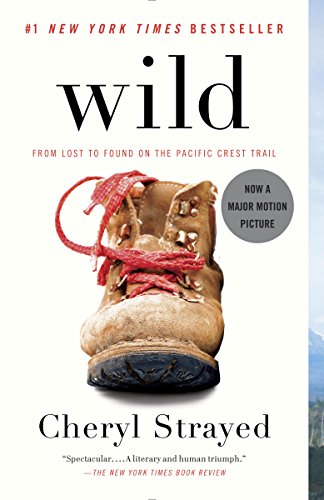
Writing Prompts from Cheryl Strayed, author of Wild
Try one for two pages of longhand writing. Go for uninterrupted flow, and don’t stop to edit. Step one is to generate without judging. Chances are that you’ll surprise yourself.
- Write about a time when you realized you were mistaken.
- Write about a lesson you learned the hard way.
- Write about a time you were inappropriately dressed for the occasion.
- Write about something you lost that you’ll never get back.
- Write about a time when you know you’d done the right thing.
- Write about something you don’t remember.
- Write about your darkest teacher.
- Write about a memory of a physical injury.
- Write about when you knew it was over.
- Write about being loved.
- Write about what you were really thinking.
- Write about how you found your way back.
- Write about the kindness of strangers.
- Write about why you could not do it.
- Write about why you did.

I’ll end with one of my favorite pieces of inspiration. It’s a simple declarative statement by Scott Adams, on exactly what you need to become a better writer.
The Day You Became a Better Writer by Scott Adams, creator of the comic strip Dilbert.
I went from being a bad writer to a good writer after taking a one-day course in “business writing.” I couldn’t believe how simple it was. I’ll tell you the main tricks here so you don’t have to waste a day in class.
Business writing is about clarity and persuasion. The main technique is keeping things simple. Simple writing is persuasive. A good argument in five sentences will sway more people than a brilliant argument in a hundred sentences. Don’t fight it.
Simple means getting rid of extra words. Don’t write, “He was very happy” when you can write “He was happy.” You think the word “very” adds something. It doesn’t. Prune your sentences.
Humor writing is a lot like business writing. It needs to be simple. The main difference is in the choice of words. For humor, don’t say “drink” when you can say “swill.”
Your first sentence needs to grab the reader. Go back and read my first sentence to this post. I rewrote it a dozen times. It makes you curious. That’s the key.
Write short sentences. Avoid putting multiple thoughts in one sentence. Readers aren’t as smart as you’d think.
Learn how brains organize ideas. Readers comprehend “the boy hit the ball” quicker than “the ball was hit by the boy.” Both sentences mean the same, but it’s easier to imagine the object (the boy) before the action (the hitting). All brains work that way. (Notice I didn’t say, “That is the way all brains work”?)
That’s it. You just learned 80% of the rules of good writing. You’re welcome.

