|
|

|
|
|
The Observe and Rapport Newsletter
|
A weekly guide of my favorite books, articles, products, and lifestyle habits.
|
|
September 29th, 2023 | by Kyle Brennan
|
|
Want this newsletter delivered to your inbox every week?
|
|

|
Thought of the Week
|
|
"The plans are nothing, but the planning is everything. Rely on planning, but never trust the plans."
Dwight D. Eisenhower famously uttered those words during the planning for the Normandy D-Day invasion, and his foresight about those plans proved to be accurate.
Mike Tyson famously said something similar, "Everyone has a plan until they get punched in the mouth."
It's not that planning is useless. It's that when push comes to shove, the perfect ideal of how you want things to play out is never going to happen.
Preparation is what's more important. Have you mentally, physically, and tactfully prepared yourself for multiple scenarios and outcomes? Whatever you plan, you will ultimatley be obligated to deviate from in response to circumstances. Someone gets sick, a bridge collapses, the technology is faulty. You're never going to be able to accurately predict how events will unfold, but preparation affords you the time to strategize the what, when, how, and why it should be done. That way, you can respond calmly when things start to go off track.
As my favorite fictional character, Jack Reacher always says, "Hope for the best, plan for the worst."
|
|
What I'm Reading
|

|
At 8:46 am on September 11, 2001, 14,000 people were inside the twin towers-reading e-mails, making trades, eating croissants at Windows on the World. Over the next 102 minutes, each would become part of a drama for the ages, one witnessed only by the people who lived it-until now.
102 Minutes is the dramatic and moving account of the struggle for life inside the World Trade Center on the morning of September 11, when every minute counted.
I'll never forget that day, seeing the smoke from the Towers from my elementary school window. I was in fourth grade and had no idea what was unfolding and how much our lives as Americans would change from that day forward.
Over the years, I've admired the heroism of not just the first responders, but of the civilians who showed unbelievable strength, fortitude, and bravery amongst total strangers - not stopping until they helped the person next to them, whether it was consoling, aiding their steps through the darkness, or ensuring they sought safety.
Earlier this year, I decided I wanted to do something that gave me that sense of community and service. I volunteered to become a volunteer firefighter with the Huntington Fire Department. Although I'm still brand new to it, the joy it has given me has been substantial - and the 22nd anniversary of that day hit extra hard for me, as I now share a bond with all of the firefighters who gave their lives. After all these years, I feel like I finally got a grasp on this tragedy and the human experience of disaster and survival.
A very good read, but not an easy one - which is exactly as it should be.
Rating: 4.5 / 5 ⭐️⭐️⭐️⭐️
|
|

|
|
The late comedian Patrice O'Neal once said, "Men want to be alone, but we don't want to be by ourselves." There is a big difference between being lonely and being alone. We all know that alone time can be much needed, but how do we confront the epidemic of loneliness in modern society? After all, if you are never alone, you cannot know yourself.
|
In 2022, Pew Research Centre found 30% of US adults are neither married, living with a partner nor engaged in a committed relationship. In 2017, the term "honjuk" (tribe of one) emerged as a counter-culture buzzword in South Korea due to the growing trend of individualism in a country that has historically placed community at the top of its hierarchical values.
|
In Francie Healy's (@franciehealey) new book, she explains that loneliness, in general, comes from a lack of social support. Whereas alone time can be quite the opposite, creating much-needed space in a world that's 'all-go.' But you need not be alone to feel lonely. Loneliness is about the absence of connection, rather than the absence of people.
So how does one "get connected?"
By seeking and developing social connections, while also learning to better connect with yourself. When you devote sufficient time to being alone, you are better able to tune into your own thoughts, and feelings and hone your listening abilities. What's more, the more awareness you have about who are and what you want from life, the better you become at knowing who feels most aligned to you.
Honjoks are linked by a commonality in their desire to take time for themselves and live a life where solitude is sought-after and celebrated rather than fought against and rejected. As Thoreau, the O.G. of alone-time once wrote, "I never found a companion that was so companionable as solitude."
#Honjok #Honjookbook
Rating: 3.8 / 5 ⭐️⭐️⭐️
|
|

|
I'm a big fan of David Brooks' writing. After stumbling upon his NYT opinion columns years ago, I sought out a book of his called The Second Mountain, which was about the four commitments that define a life of meaning and purpose: to a spouse and family, to a vocation, to a philosophy or faith, and to a community.
I recently heard Dr. Peter Attia on a podcast mention The Road to Character, so when I found the book in the Used section of a bookstore, I had to pick it up.
The Road to Character explains that we have Resumé Virtues and Eulogy Virtues.
Resumé Virtues are the kinds of external goals you look to achieve in life - wealth, a good job, promotions, a spouse, and general accomplishments.
Eulogy Virtues, on the other hand, are the things people will say about you at your funeral. What kind of character did you possess?
Through this lens, Brooks identifies several key figures in history who exemplified Eulogy virtues to the utmost degree - people like Eisenhower, Dorothy Day, George Eliot, A. Philip Randolph, and Frances Perkins.
It's essentially a long-form commencement speech about building a strong inner character through internal struggle and a sense of your own limitations. We do not find what we were put here to do by looking within. We find what we were meant to do by looking outside ourselves and using our natural inclinations and talents to pursue a larger goal than that of personal aggrandizement.
David Brooks calls for a cultural shift away from the "Big Me" meritocracy of seeking status and climbing the social ladder, and back in the direction of modesty, self-effacement, and public virtue. Less Kardashians and more regular old good people who lead lives of quiet self-respect, who are secure in their own inner character, and who don't have to broadcast their good deeds to feel important or to get ahead. It's good cultural criticism from one of our finest public intellectuals.
Rating: 3.5 / 5 ⭐️⭐️⭐️
|
My Latest Article
|

|
“If you want to guarantee a life of misery,” Munger said, “First, be unreliable.”
|
So often, we’re told what we should be doing in order to be happy. The right internships, the right haircut, and the right extracurriculars that check the right boxes on the resumé. Conversely, knowing what to avoid is just as, if not more important, than knowing what to do.
|
Article I'm Reading
|

|
Last week, a federal appeals court confirmed that science cannot function without free speech. Dr. Jay Bhattacharya reflects on a victory for himself—and every American.
|
This should be a much bigger story than it is. What the government did during COVID-19 to ban, block, or censor disagreeing opinions on social media sites like Facebook and Twitter was not only illegal but unconstitutional.
|
|
The federal government can no longer threaten social media companies with destruction if they don’t censor on behalf of the government.
|
|
Song I'm Listening To
|

|
You ever hear one of those songs you've heard plenty of times but for some reason this time it just strikes a different chord? Like you weren't paying attention to how good it was the previous times you heard it? That's what happened to me with this song by Jim Croce. I'm a sucker for a great story in a song:
|
Uptown got its hustlers
The Bowery got its bums
42nd Street got big Jim Walker
He a pool-shootin' son of a gun
Yeah, he big and dumb as a man can come
But he stronger than a country hoss
And when the bad folks all get together at night
You know they all call big Jim "Boss"
|
Quote I'm Pondering
|
|
Keep some souvenirs or your part, or how will you ever prove it wasn't all a dream?
-- Ashleigh Brilliant
|
|
|

|
Keith and Kyle sit down to discuss the possibility of psychedelic inspiration for religious traditions, techniques for becoming a better communicator, and the paradox of the human mind.
|
|
Books discussed in this episode:
|
|
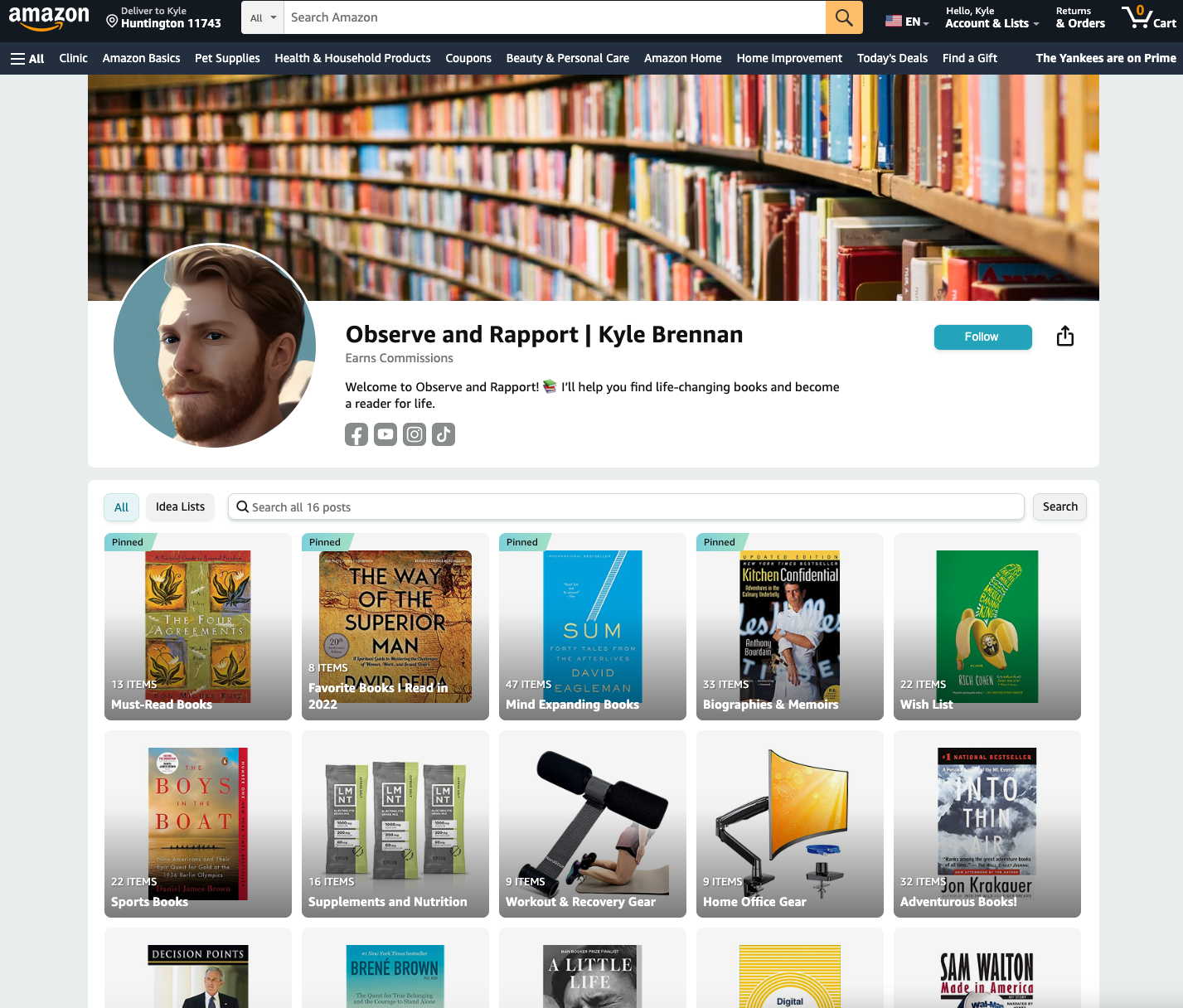
Check Out My Amazon Favorites Bookstore
|
|
|
Browse my favorite book selections hand-curated by me. I also earn commissions so if you buy anything, those earnings get reinvested right back into this fancy newsletter ;)
|
|
  
|
Reminder to share this newsletter with friends and family! Subscribe link here
|
|
|
|
|
|
|
|

|
|
|
Kyle's Published Work
|
|
|
|
|
|
33 Life Lessons on My 33rd Birthday
|
|
|
|
Thirty-three was a big one. Mostly because I became a dad. Our daughter was born on New Year’s Eve — a fitting arrival for a kid destined to reset everything. It’s been a beautiful, if slightly sleep-deprived blur ever since. I’ve only been “Dad” for less than ten months, but if I’m being honest, I’ve been preparing for the role for over …
|
|
|
|
|
|
|
|
Depth Over Downloads: Why Spending Time with Books Still Matters
|
|
|
|
Everyone wants faster information. But no one asks if faster information leads to better understanding — or a better life. In the age of AI and tweet-sized wisdom, we’ve confused information with transformation. But there’s a massive difference between knowing what a book says and being changed by it. The Delusion of Instant Learning In a recent interview, political journalist Ezra Klein admitted he once believed …
|
|
|
|
|
|
|
|
The Jack Reacher Approach to Never Being Caught Off Guard
|
|
|
|
There’s no difference between a pessimist who says, ‘Oh, it’s hopeless, so don’t bother doing anything,’ and an optimist who says, ‘Don’t bother doing anything, it’s going to turn out fine anyway.’ Either way, nothing happens.” —Yvon Chouinard, Founder of Patagonia I don’t read much fiction, but I’ve always been hooked on Lee Child’s Jack Reacher. He’s not your typical …
|
|
|
|
|
|
|
|
|


